We want to equip people with the knowledge they need to protect their family and have peace of mind knowing that everything will be taken care of while they are away. If you’re ready to start planning your future and the futures of your loved ones, fill out our short contact form and we’ll call you to schedule a free consultation.

A living will is a legal document that allows people to specify what should happen to them if they are unable to make decisions for themselves due to injury or illness. If you’ve written a living will, it contains all of the information you’ll need to put your affairs in order and gives your agent the authority to make decisions on your behalf.
A Living Will serve the following purposes:
Your family will be able to make decisions for you if you do not take this step. Our estate planning and wills services are meant to protect you and your loved ones, so contact us today to learn more about how we can help.

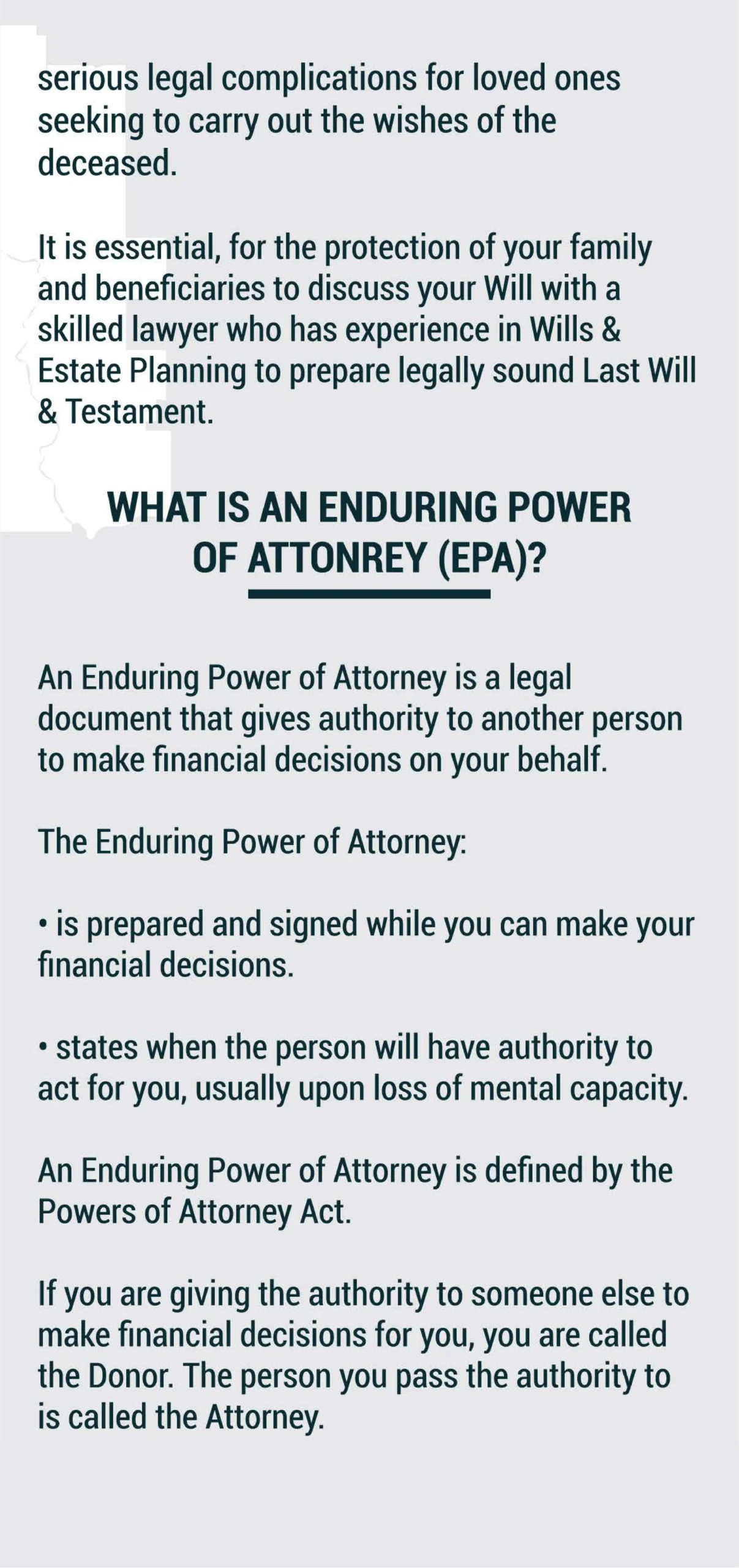
A personal directive is given when a person is unable to make decisions for themselves due to illness or injury. It outlines who should make decisions about your health and personal care on your behalf, as well as where you should live.
Your family can use the personal directive if you are unable to communicate to determine what decisions you would have made if you were still living. This document can be used to give a conservator authority over your affairs, which varies from a Power of Attorney in that this person will have complete power over your affairs.
A Personal Directive has two main parts:
Our lawyers at Laws & Beyond have been protecting our clients’ interests for years. We’ll help you find the right solution to meet your needs through all aspects of estate planning. Contact us today for a consultation!

Probate of Wills is a legal procedure that occurs when someone passes away. When you have a legal will, the court and your administrator oversee the process and ensure that your assets are allocated to the people who are entitled to them. If a person dies without a Will, their heirs may be unable to receive their inheritance if obligations or taxes must be paid. This is why you should consult with a lawyer about how to safeguard your family in the event of your death.
When it comes to figuring out what will happen to your property and assets after you pass away, an estate administration lawyer can provide you peace of mind. A person who is 18 or older, of sound mind and not under any influence can make a valid will.
Any estate planning lawyer in Alberta must ensure that the following conditions are met:
We help Calgary families make Wills to ensure that their property is handled in the right way after they are gone. Our estate planning lawyers will guide you through the process of making a Will, ensuring that your assets are passed on to your family in an orderly manner.

Without a Will, a person is deemed to have died “intestate,” and their property must go through the estate administration process. Letters probate or letters of administration must be used to designate an estate administrator.
The administrator is in charge of collecting all of the deceased’s assets, paying any outstanding taxes or obligations, and distributing the remaining assets according to the law. An administrator’s job can be full-time, at least in the early phases of probate, when they must keep meticulous records of their work.
An estate administration lawyer will help you through the process of making a Will to prevent any complications with your loved ones.
Our estate planning lawyers are here to help you through all stages of your family transition.

Estate planning for transfers of assets during life or at death can benefit you and your family in many ways. It is possible to set up an arrangement that offers protection, business continuity, tax savings and wealth transfer.
Life insurance, securities, and real estate can all be used to transfer assets. It’s critical to consult with one of our attorneys about how an asset transfer through one or more estate planning strategies can benefit you.

Do you need to safeguard your interests in the event that you are unable to make decisions in the future? It’s critical to have a plan in place for things like health care, finances, and final wishes. We can assist you with all of these issues using an estate planning service, including Powers of Attorney.
There are three main types of Powers of Attorney: revocable, general and irrevocable. Others are medical and financial powers of attorney.
For example, if you have a business and hire an accountant, you may want to issue them with a Power of Attorney to file your taxes at the end of the year. A person will typically have a Revocable Power of Attorney for only one specific task or transaction. If you want to give someone else power over all your finances, then it would be more appropriate to issue them with a General Power of Attorney.
b) General Power of Attorney: A General Power of Attorney is much like a Revocable Power of Attorney in that it gives another person power over certain items, but the difference is that a General Power of Attorney does have an expiry date.
An irrevocable Power of Attorney can be canceled if;
The major reason a person could seek to acquire an irrevocable Power of Attorney is to keep their affairs private from the rest of the world. You may rest assured that your personal information will not be exploited in this manner. This sort of Power of Attorney can also be used to appoint someone to act as your alternate attorney in your affairs if your primary attorney dies.
d) Medical and Financial Powers of Attorney: Medical and Financial Powers of Attorney are like General and Irrevocable Powers of Attorney, but in these documents, you can give power over your health care decisions and financial affairs, respectively. A person who has been given an unlimited Power of Medical Treatment can make medical decisions for anyone who has assigned the document to them.
At Laws & Beyond, our lawyers will work with you to develop a plan based on your individual needs to help you get the most out of our estate planning services.
Fill out our online contact form for a consultation on your estate plan!


Please reach us at info@lawsnbeyond.com if you cannot find an answer to your question.
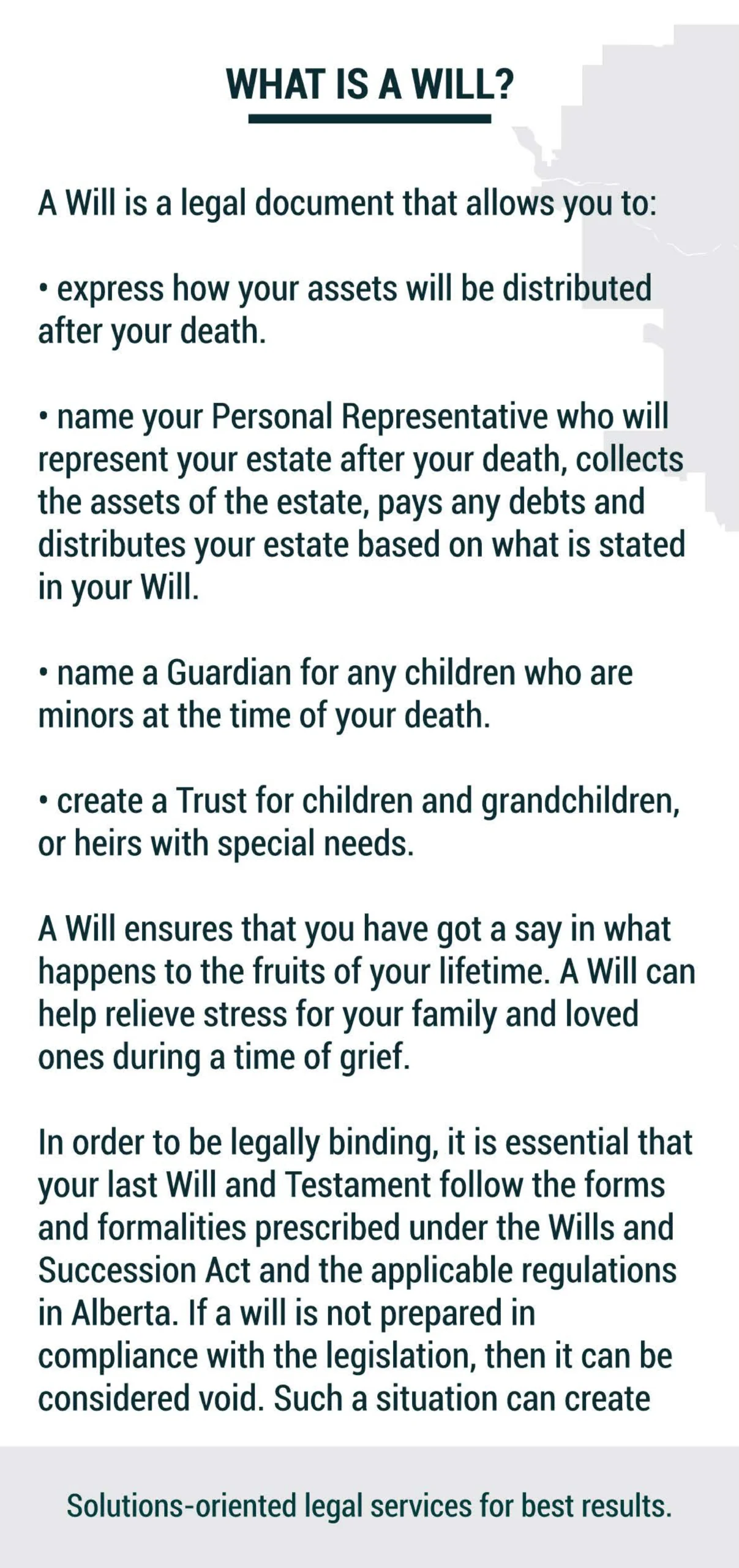
Will is a legal document that expresses the intentions of a person for the distribution of their assets after death.
In your will, you can name a suitable guardian for minor children and as well as create a trust for children and grandchildren, or heirs with special needs.
However, note the court does not always have to follow your wishes and will appoint the guardian based on what is in the best interests of the child.
The term Personal Representative refers to:
– A person or corporation appointed by a testator of the will to manage and distribute his or her estate after death. In Albetera, the Personal Representative has the powers of both a trustee and executor of estate.
– The administrator of estate appointed by the court pursuant to a Grant of Administration application giving them legal rights to act as a Personal Representative. This is often the case when an individual dies without a will or all of the Personal Representatives named in the will are not suitable or deceased.
You can name multiple executors in the will as co-executor.
Also, you can name one executor as the primary executor and also name alternative executors who can take role of the primary executor, if required.
Laws & Beyond provides a full suite of estate planning and administration services, including drafting Wills, Enduring Powers of Attorney, and Personal Directives. They also assist with Probate applications, estate administration for executors, and estate litigation.
A Will ensures that your assets are distributed according to your wishes rather than government legislation. It allows you to name an executor you trust, appoint guardians for minor children, and minimize potential legal hurdles and taxes for your beneficiaries.
If you die without a Will (intestate), your estate is distributed according to the Wills and Succession Act of Alberta. This often means your assets may not go to the people you intended, and the process of settling your estate becomes more complicated, expensive, and time-consuming for your family.
Often called a “living will,” a Personal Directive allows you to appoint someone to make non-financial decisions for you (such as healthcare, medical treatments, and living arrangements) if you lose the mental capacity to make those decisions for yourself.
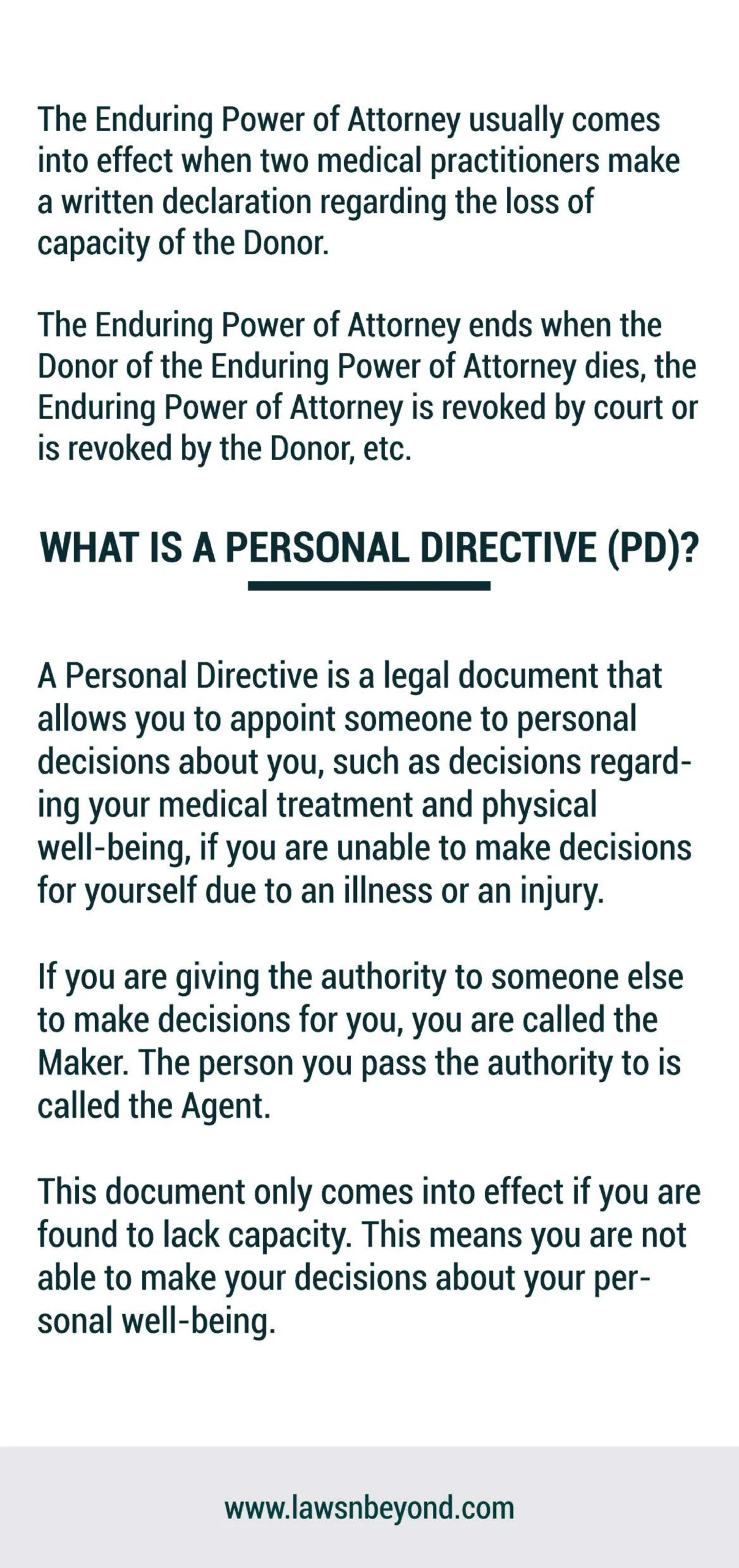
This is a legal document that appoints a person to manage your financial affairs and property if you become mentally incapacitated. Without this document, your family might have to apply for a court-ordered trusteeship to manage your bank accounts or sell your home, which is a costly and lengthy process.
Probate is a court process that confirms a Will is valid and gives the executor the legal authority to deal with the deceased’s assets. While not every estate requires probate (e.g., very small estates or assets held in joint tenancy), most financial institutions and the Land Titles Office require a Grant of Probate before releasing assets.
An executor is responsible for gathering the deceased’s assets, paying off debts and taxes, filing final tax returns, and distributing the remaining estate to the beneficiaries. Laws & Beyond assists executors in navigating these complex legal duties to avoid personal liability.
You should review your estate plan after major life events, such as marriage, divorce, the birth of a child, the death of a named executor or beneficiary, or a significant change in your financial situation (like buying a business or property).
Yes. A Will can be challenged on several grounds, such as “undue influence” (someone pressured the deceased), lack of mental capacity at the time of signing, or if the Will fails to provide adequate support for a spouse or dependent child as required by law.
Estate litigation involves legal disputes over an estate. This can include disagreements between beneficiaries, claims against an executor for mismanagement, or “Dependent Support” claims where a family member feels they were unfairly left out of a Will. Laws & Beyond represents clients in resolving these sensitive disputes.
If a person dies without a Will, or if the named executor is unable to act, the court must issue a Grant of Administration to appoint someone to manage the estate. The firm helps family members apply for this status to ensure the estate is handled legally and efficiently.
Phone: 403-300-5297
Fax: 403-300-5298
Email: info@lawsnbeyond.com
Mon 08:30 am – 05:00 pm
Tue 08:30 am – 05:00 pm
Wed 08:30 am – 05:00 pm
Thu 08:30 am – 05:00 pm
Fri 08:30 am – 05:00 pm
Sat By Appointment
Sun By Appointment
NOTE: Please do not send any confidential information or details about your case via this page or by email. We will not review any information sent to us, and we will not give advice until we have booked a consultation with you.
© 2021-26 Laws & Beyond
Website Developed By COD Studio
WhatsApp us