
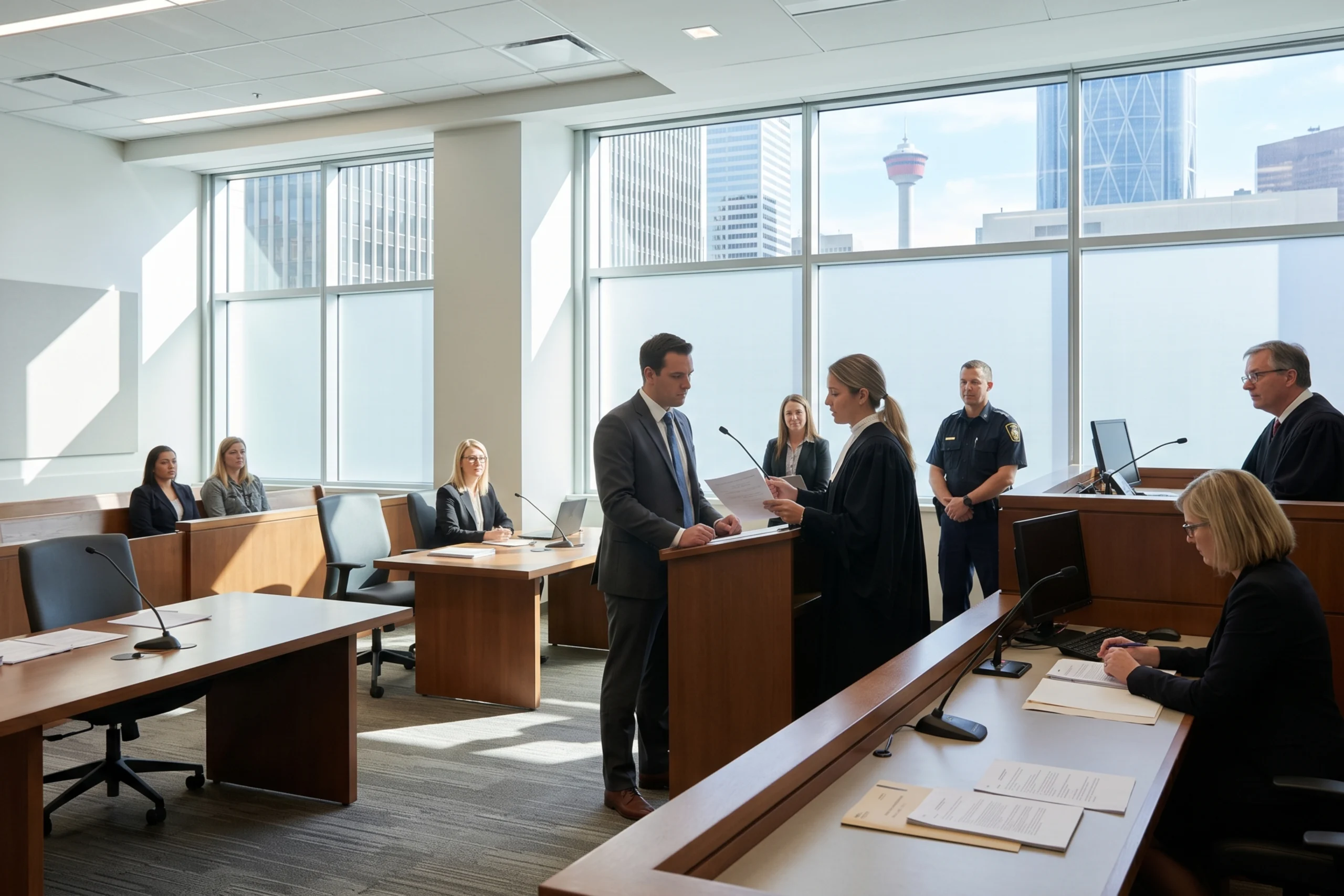
Civil litigation is the legal process of resolving a dispute between two or more parties through the court system. Unlike criminal cases, where the government brings charges against an individual, civil cases are initiated by one private party (the plaintiff) against another (the defendant).
The goal is not punishment. Civil litigation typically seeks one of two outcomes:
- compensation in the form of money, or
- a court order requiring a specific action or prohibiting certain conduct.
The standard of proof in civil cases is “on a balance of probabilities,” which means a court must be satisfied that your version of events is more likely than not to be correct.
This is a lower threshold than the criminal standard of “beyond a reasonable doubt.”
Common Types of Civil Disputes in Alberta
Civil litigation covers a wide range of disputes. Some of the most common include: (ADD links to our other blogs)
- Breach of contract: One party fails to fulfill their obligations under a signed agreement, whether that is a service contract, a purchase agreement, or a business arrangement.
- Debt recovery: Money owed and not paid, including unpaid invoices, loans, or other financial obligations.
- Property disputes: Disagreements over boundaries, ownership, damage to property, or encroachments.
- Employment disputes: Wrongful dismissal, constructive dismissal, or disputes over severance and notice obligations.
- Construction disputes: Unpaid contractors or subcontractors, defective work, or disagreements over project scope. These matters may also engage Alberta’s Prompt Payment and Construction Lien Act, which provides specific protections and timelines for those in the construction industry.
- Business disputes: Shareholder disagreements, partnership breakdowns, or disputes over business assets.
- Estate litigation: Disputes involving wills, estates, powers of attorney, executors, beneficiary rights, or challenges regarding the validity or administration of an estate.
How the Civil Litigation Process Works in Alberta
Civil litigation can feel intimidating if you have never been involved in it before. Here is a straightforward breakdown of how most matters proceed.
Step 1: Demand and Negotiation
Most disputes begin and end before any court filing. A lawyer can send a formal demand letter setting out your position and what you are seeking. Many matters resolve at this stage, saving both parties the time and expense of court proceedings.
Step 2: Filing a Claim
If negotiation does not resolve the matter, the plaintiff files a Statement of Claim in the appropriate court. In Alberta, the right court depends on the amount in dispute. Alberta’s Court of Justice (Civil Division), commonly called Small Claims Court, handles claims up to $100,000. The Court of King’s Bench handles larger or more complex matters.
Step 3: Defence and Pleadings
Once served with the claim, the defendant files a Statement of Defence outlining their position. The parties then exchange relevant documents in a process known as Questioning or Discovery. This stage can take considerable time in complex cases.
Step 4: Attempts to Resolve
The majority of civil cases in Alberta settle before trial. Mediation, direct negotiations between lawyers, and Judicial Dispute Resolution (JDR), where a judge helps facilitate a resolution, are all options that can resolve matters at a fraction of the cost of a full hearing.
Step 5: Trial
If the matter cannot be resolved, it proceeds to trial. A judge hears the evidence from both sides and renders a decision. Civil trials can last anywhere from a single day to several weeks, depending on the complexity of the issues involved.
How Long Does Civil Litigation in Alberta Take?
It depends. A straightforward Small Claims matter may resolve in a few months. A complex commercial dispute before the Court of King’s Bench can take two to four years or longer from filing to trial. Scheduling, document volume, the number of parties, and the level of cooperation between the parties all affect the timeline. This is one reason settlement through negotiation or mediation is often the more practical outcome.
Limitation Periods: Why You Cannot Afford to Wait
There are strict deadlines for bringing a civil claim in Alberta. Under the Limitations Act, the basic limitation period is two years from the date a person knew, or ought reasonably to have known, that a claim existed.
If you miss this deadline, you may lose the right to sue entirely, regardless of how strong your case is. Limitation periods run automatically by operation of law, and ignorance of the deadline is not a defence.
When Should You Hire a Civil Litigation Lawyer in Calgary?
Not every dispute requires a lawyer, but legal representation makes a meaningful difference in many situations. Consider consulting a civil litigation lawyer if:
- The amount in dispute is significant
- The legal issues are complex or involve multiple parties
- The other side has retained a lawyer
- You have been served with a Statement of Claim naming you as a defendant
- You are approaching your limitation period deadline
- Negotiation has broken down and you are uncertain about your next step
- You are dealing with a construction lien or a formal demand under the Prompt Payment and Construction Lien Act [INTERNAL LINK: construction lien post]
Even a single consultation can clarify your position and the realistic options available to you.
Can You Represent Yourself in Civil Court in Alberta?
You are legally permitted to represent yourself in civil proceedings, which is referred to as acting as a self-represented litigant. For smaller, straightforward Small Claims matters, self-representation can be a reasonable choice.
However, civil procedure has detailed rules about documents, deadlines, disclosure, and evidence. Mistakes, including procedural ones, can affect the outcome of your case or result in cost awards against you. For disputes involving significant money, complex facts, or an opposing party with legal representation, having a lawyer meaningfully improves your position.
Frequently Asked Questions
How much does a civil litigation lawyer cost in Alberta?
Costs vary depending on the complexity of the matter, the lawyer’s experience, and how far the dispute proceeds. Most civil litigation lawyers charge an hourly rate and require an upfront retainer. A straightforward Small Claims matter will generally cost less than a multi-party commercial dispute. A reputable lawyer will be transparent about fees and provide a realistic estimate during your initial consultation.
What is the limitation period for civil claims in Alberta?
Under Alberta’s Limitations Act, the basic limitation period is two years from the date you knew or reasonably ought to have known that a claim existed, with an ultimate limitation period of ten years regardless of discovery. Missing a limitation period can permanently bar you from bringing a claim. Seek legal advice as soon as you believe a dispute may be heading toward litigation.
What is Small Claims Court and is it right for my dispute?
Alberta’s Provincial Court (Civil Division), informally called Small Claims Court, handles civil claims up to $100,000. The process is more accessible and less formal than the Court of King’s Bench, making it a practical option for straightforward disputes. Even in Small Claims, legal guidance can help you present your case clearly and avoid procedural errors.
Can a civil dispute be resolved without going to court?
Yes, and the majority are. Negotiation, mediation, and Judicial Dispute Resolution all allow parties to reach a binding resolution without a trial. These processes are generally faster, less expensive, and less adversarial than a full court proceeding. A civil litigation lawyer can advise on which approach suits your situation and help you negotiate from a well-informed position.
Laws & Beyond assists clients throughout Calgary and Alberta with civil litigation matters. If you have a dispute and are unsure of your options or next steps, contact us at 403-300-5297 or info@lawsnbeyond.com to schedule a consultation.