

If you are separating or divorcing in Calgary, understanding these changes now can save you months of delays and thousands in legal costs. Beginning January 2, 2026, Alberta is introducing a completely redesigned process for family law matters called the Family Focused Protocol (FFP). These changes will impact how parents and separating couples access the Court of King’s Bench for issues such as parenting, child support, spousal support, and property division.
The new system is designed to reduce conflict, improve efficiency, and ensure families have the right information and preparation before a judge becomes involved.
Click here to watch a short video for quick update on the topic.
Key Takeaways
a. New family court process starts January 2, 2026
b. Four mandatory steps required before seeing a judge
c. Private intake meetings replace public docket court
d. Same justice guides your case from start to finish
e. Preparation should begin now
1. Why Alberta Is Changing the Family Court System
The traditional process often involved multiple chambers appearances, delays, fragmented hearings, and ongoing conflict. The new Family Focused Protocol is meant to:
a. Reduce unnecessary court appearances
b. Encourage earlier resolution through mediation and settlement
c. Provide more consistency with dedicated family law justices
d. Protect children from prolonged conflict
e. Ensure cases move through the system in a structured, predictable way
2. Four Mandatory Steps Before You Can Access a Judge
Before you can meet with a justice under the new system, you must complete these requirements:
a. Parenting After Separation (PAS) Course
A free online course (valid for 2 years) required for anyone seeking parenting time with children under 18.
b. Alternative Dispute Resolution (ADR)
You must attempt mediation, collaborative law, or another resolution method within the last 6 months before filing your court application.
c. Full Financial Disclosure
Complete, up-to-date financial documents including income, assets, debts, and property valuations must be served on the other party. This includes Cunningham/Sweezy disclosure where appropriate.
d. Meeting with a Family Court Counsellor
Required for self-represented parties with children under 18 in areas where Family Justice Services are available.
e. Exception
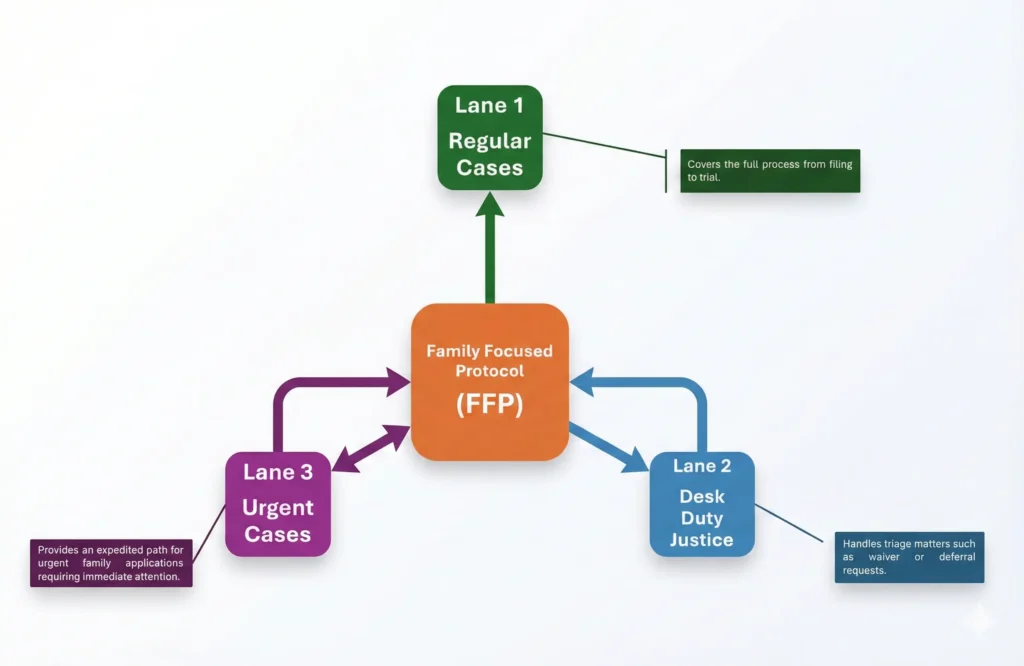
Waivers or deferrals may be granted for urgent matters through the desk duty justice process.
3. How Family Law Cases Will Start in 2026
To access the new system:
a. Commence and serve your family law action (Statement of Claim or Family Law Act claim)
b. Complete all mandatory requirements and gather proof of completion
c. File a Mandatory Intake & Triage (MIT) package including your application and supporting documents
d. Case Management Officer (CMO) review – a senior family lawyer reviews your package to ensure compliance before it proceeds to a justice
The CMO will either certify your package as complete, reject it if requirements aren’t met, or “snooze” it to allow minor corrections.
4. The Mandatory Intake Conference (MIT)
The Mandatory Intake & Triage (MIT) meeting replaces the traditional Family Docket Court appearance. Instead of a public courtroom setting, you’ll have a private one-hour meeting with a justice who will:
a. Identify key issues in your case
b. Consider and grant interim relief if needed
c. Give procedural directions (such as ordering appraisals or valuations)
d. Set expectations and timelines for resolution
e. Assess special needs (security, cultural considerations, domestic violence factors)
Important: The same justice assigned to your MIT will guide your case through settlement conferences and up to trial, ensuring consistency and familiarity with your file.
5. What Happens After the MIT Meeting
Depending on your file, the matter may proceed to:
a. Settlement Conference
Scheduled after completing any procedural orders from the MIT. May be binding (if the justice agrees and both parties consent) or non-binding. The goal is comprehensive resolution of all outstanding issues.
b. Case Conferences
Additional interim applications are highly discouraged. If further interim relief is needed, requests must be made in writing to your assigned Case Conference Justice.
c. Resolution Counsel
If settlement efforts are unsuccessful, matters may be referred to Resolution Counsel to develop a litigation plan and prepare for trial. Available province-wide for parties where one person earns under $90,000 annually.
d. Trial or Streamlined Trial
If resolution isn’t achieved, trials will be scheduled to occur within 18 months. A pre-trial conference occurs 3 months before trial to ensure readiness.
6. Urgent Matters and Exceptions
Some matters do not go through the standard FFP process, including:
a. Emergency protection orders
b. Urgent applications requiring immediate attention
c. Surrogacy orders
d. Appeals
e. International child abduction cases
f. Interjurisdictional support matters
Urgent hearing requests are vetted by the Desk Duty Justice province-wide.
7. What This Means for Calgary Families
The new system aims to:
a. Reduce delays with structured timelines and dedicated justices
b. Encourage early settlement through mandatory ADR before court involvement
c. Limit repeat interim applications by addressing relief comprehensively at the MIT stage
d. Provide structured oversight with one justice managing your case throughout
e. Support children’s well-being by minimizing conflict and expediting resolutions
8. How to Prepare Now
Families should take these steps before January 2026:
a. Update or complete your PAS certificate (must be within last 2 years)
b. Gather complete financial disclosure in digital format
c. Schedule ADR early (must be within last 6 months)
d. Work with a Calgary family lawyer on MIT package preparation
e. Self-represented parties: Meet with a Family Court Counsellor
Existing cases: If you have a family law matter already in the system without a final order, you’ll need to transition to the FFP process. Use the remaining months of 2025 to complete mandatory requirements.
9. How We Can Help
At Laws & Beyond, we assist Calgary families with every step of the new Family Focused Protocol:
a. Mandatory requirements – guidance on PAS, ADR options, and FCC meetings
b. Financial disclosure preparation – complete, court-ready documentation
c. ADR coordination – connecting you with experienced mediators
d. MIT package preparation – ensuring compliance before CMO review
e. Full representation at MIT conferences, settlement conferences, and trial
Don’t wait until January 2026 to prepare. Our Calgary family law team has attended the Court of King’s Bench full day training on the FFP and is ready to guide you through the transition.
Book Your Consultation Today
Contact us at 403-300-5297 or info@lawsnbeyond.com
Get prepared now and avoid delays when the new system takes effect. We’ll ensure you’re ready with all mandatory requirements completed and your MIT package properly prepared.
This blog post is for informational purposes only and does not constitute legal advice. Family law matters require individualized legal guidance. Contact our Calgary family lawyer to discuss your specific situation.
Frequently Asked Questions
Q: Do these changes apply to my existing family law case?
Yes, existing matters without final orders must transition to the FFP process in 2026.
Q: What happens if my ex-partner won’t participate in ADR?
You can request a waiver from the desk duty justice if your partner refuses to participate.
Q: How long does the Parenting After Separation course take?
The free online course takes approximately 4 hours to complete.
Q: Can I still get emergency relief?
Yes, urgent matters follow a separate expedited process outside the standard FFP.
—
Do not hesitate to contact us for a consultation to discuss your matter. Call us at 403-300-5297 or email us at info@lawsnbeyond.com and we will provide you with the support you need.